Documenting Yezidi Sacred Sites: A New Mission to Welat Sheikh and Lalish
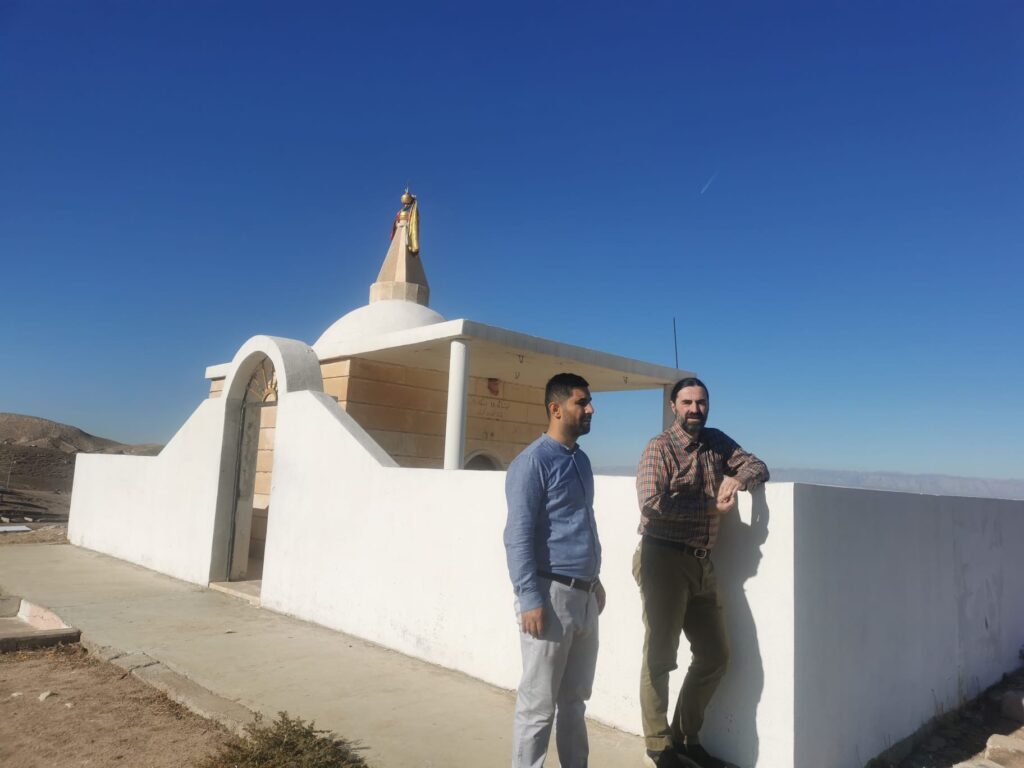
For more than three years, the Yezidi Studies Center at Leipzig University has been carrying out a comprehensive project to document Yezidi holy sites. The initiative aims to preserve this invaluable religious heritage and make reliable information about Yezidi tangible heritage accessible to researchers, communities, and the wider public. These sacred sites form a vital part of Yezidi identity and play an essential role in maintaining the community’s presence in its ancestral homeland. As part of this long-term effort, the team has conducted extensive fieldwork in Armenia, Germany, and Iraqi Kurdistan region, documenting a large number of Yezidi religious sites. Despite significant progress, the team emphasizes that much work remains due to the vast number of sites located both in the Yezidis’ original regions and across the diaspora. The team’s latest field visit to the Kurdistan Region of Iraq, conducted on November 19, 2025, marked an important milestone. Professor Sebastian Maisel, Dr. Qader Saleem Shammo, and Sami Saleem Shammo visited key religious locations in the Walat Sheikh area, on the slopes of Mount Maqloub, and in the surrounding regions leading to the Lalish Temple. During the visit, the team continued its documentation efforts and held discussions on the historical and spiritual importance of these sites. They also explored strategies to strengthen the project and ensure its long-term completion, an effort they view as crucial for safeguarding Yezidi religious heritage.
Leipzig and Duhok Polytechnic Universities Advance Yezidi Studies Collaboration
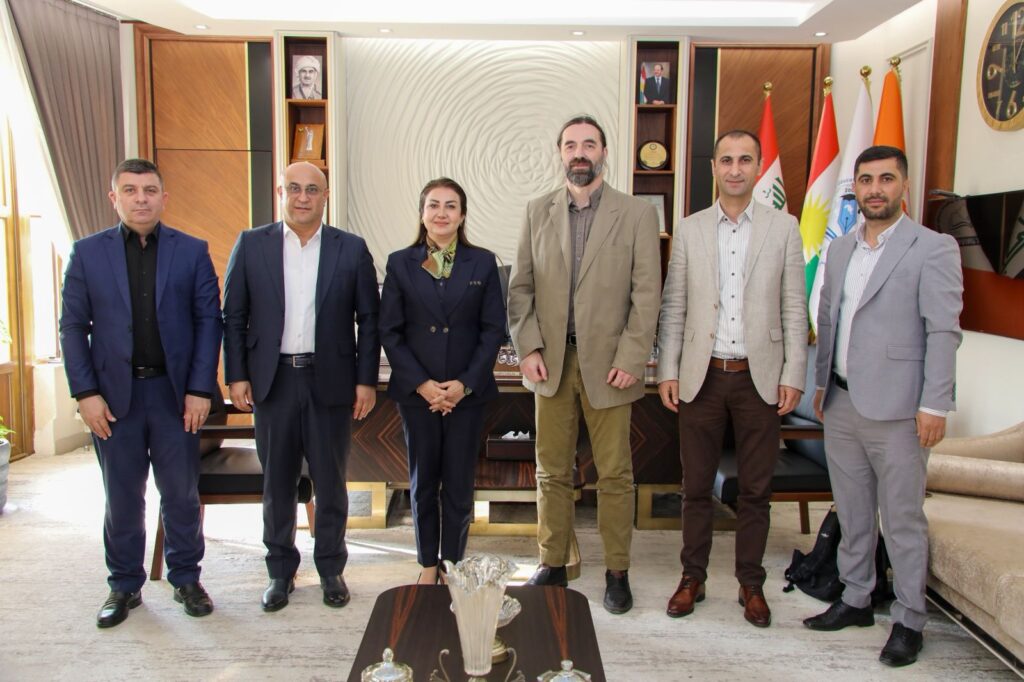
Leipzig University and Duhok Polytechnic University discussed expanding their scientific and academic cooperation through the development of new projects focused on Yezidi studies. The discussion took place during a meeting between a delegation from the Yezidi Studies Center at Leipzig University, comprised of Professor Sebastian Meisel, Dr. Qader Saleem Shammo, and Sami Saleem Shammo, and the President of Duhok Polytechnic University, Professor Aree Adel Abdulqader. Also in attendance were Dr. Muayad Barakat Hassan, Vice President for Administrative and Financial Affairs, and Dr. Yaman Sami Shareef, Vice President for Scientific Affairs and Postgraduate Studies. The two sides explored programs for launching new research projects, strengthening scientific and academic exchange, and supporting Yezidi students at Duhok Polytechnic University, particularly displaced students, by enhancing their skills and providing opportunities to pursue postgraduate studies in Germany. The meeting also addressed additional collaborative scientific projects that will be announced upon implementation. A joint research project between the two universities, in partnership with Bundeswehr University Munich, is in its final stages, with results expected to be published in the coming months. The discussions took place in the office of the university president in Duhok on November 17, 2025.
MEPS Forum to Engage with Special Yezidi Panel
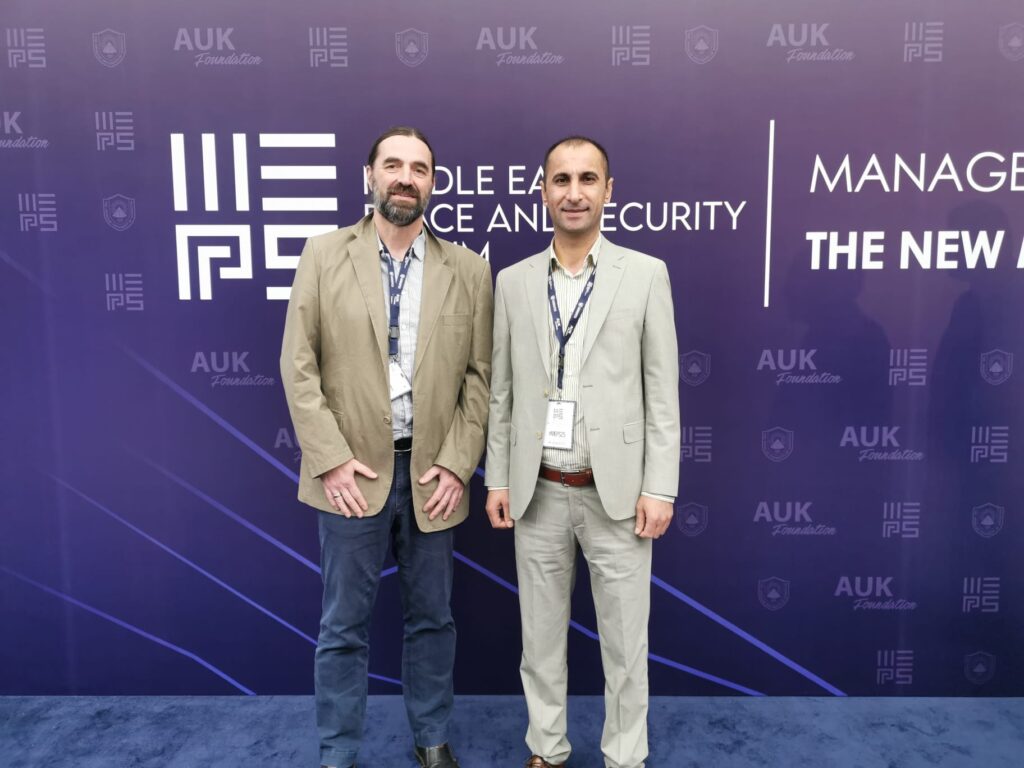
The Yezidi Studies Center was invited to participate at The Middle East Peace and Security (MEPS) Forum 2025 which was held at the American University of Kurdistan in Duhok. The MEPS Forum is a great opportunity to share and connect with many high-ranking international decision-makers, experts, academics and activists. This years topic was Managing the Chaos – The New Middle East, and the Yezidi Studies Center took that opportunity to engage with the participants about topics that are important to the Yezidis, in particular issues related to higher education, fair access to education (or the lack of access), and international cooperation in the field of academic research. Among the speakers who addressed the Yezidi issue was Mohammad Al Hassan, special representative of the UN Assistance Mission for Iraq. It is planned for the Yezidi Studies Center to participate in next year´s MEPS with a special panel dedicated to the Yezidi cause.
Statement and Report on the Yezidi Diaspora Conference in Hannover
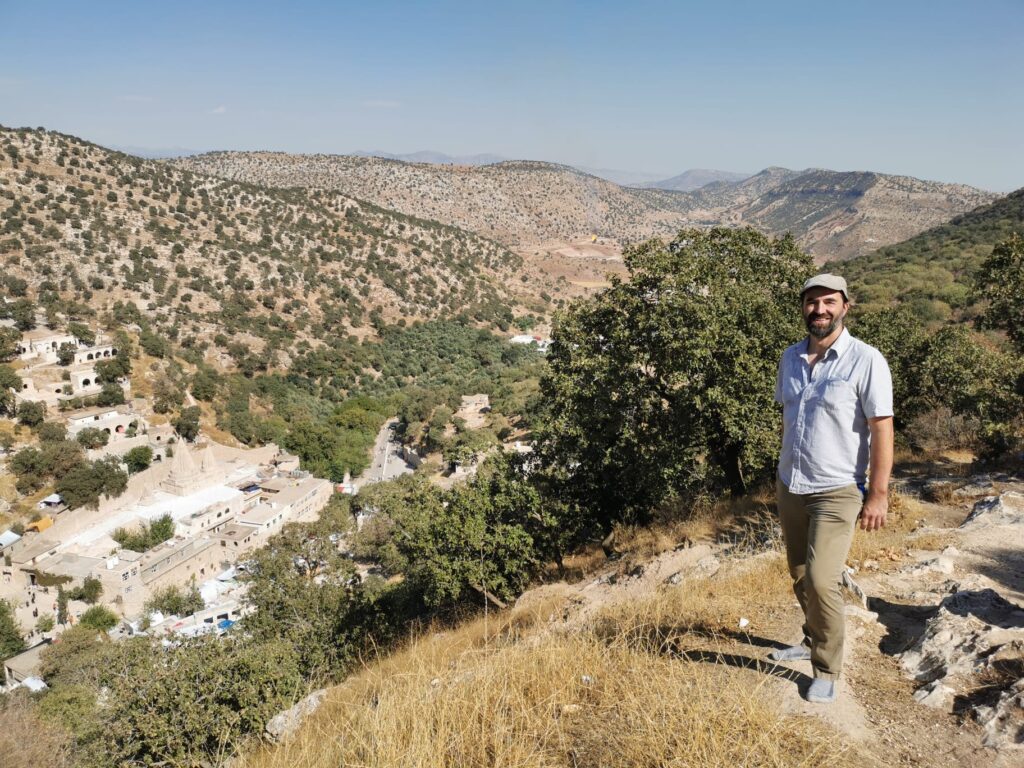
Prof. Dr. Sebastian Maisel on behalf of Yezidi Studies at the University of Leipzig The Yezidi Studies Center at Leipzig University Leipzig is dedicated to advancing academic research on the Yezidi community, its religion, history, culture, and heritage. Established in 2021, our center aims to provide accurate, impartial knowledge and a neutral platform for researchers and those serving the Yezidi community, free from political, personal, or partisan conflicts. We emphasize our commitment to supporting the Yezidi community as a whole, promoting solidarity and self-determination without discrimination or alignment with any specific group, in the old and the new homeland. The Center does not participate in or endorse conferences or activities that deliberately exclude or marginalize any Yezidi faction. Our academic and ethical responsibility is to remain an independent, scientific institution focused on serving the Yezidi community without politicization. We welcome collaboration with any entity or project that aligns with these principles and serves the Yezidi community. However, we urge organizers of Yezidi-related events to accurately represent our university’s position and avoid exploiting our reputation for purposes that do not benefit the Yezidis. We reserve the right to withdraw from any event that deviates from its stated goals or harms the community. Our observations reveal concerning trends within some Yezidi initiatives, including personal disputes, partisan affiliations, and the exploitation of Yezidi issues for fame, political gain, or commercial purposes. Such practices undermine the community’s interests, particularly at a critical juncture in its history marked by past injustices and an uncertain future. Additionally, some individuals claim to represent all Yezidis, disregarding others’ perspectives, which fosters division and chaos. We believe no single party should speak for the entire community. Inclusive events with diverse specialists, including non-Yezidi researchers who support Yezidi causes, are essential for constructive dialogue and unity. The Center advocates for integrity, impartial debate, and meaningful collaboration to achieve positive outcomes for the Yezidi community. We are committed to supporting initiatives that uphold these values, whether we participate directly or not Members of the global Yezidi community got together in Hannover, Germany on September 13-14, 2025 to hold a diaspora conference under the slogan Through Dialog – Towards Reorganization and Institutionalization. Considering the current dispersion of Yezidis across many countries and continents as a result of multiple genocidal attacks and persecution this offered an opportunity to unify the various segments of the Yezidi community who share a common belief in the Yezidi religion, but represent multiple geographical, cultural and political identities. Of the approximately 800,000 Yezidis worldwide, half of the population resides in Iraq, the old ancestral homeland. In Syria, also considered part of the traditional Yezidi homeland, only about 6,000 remain as well as a few hundred in Turkey. Some 50,000 Yezidis live in Armenia and Georgia where they have established their faith and culture for over 100 years. That leave the remaining Yezidis to live away from the homeland, in exile or the diaspora. Germany is now home to over 200,000 Yezidis, while Russia hosts about 50,000. Smaller groups settle in other European countries in addition to ca. 5,000 Yezidis in the USA and 4,000 in Australia. In some cases, Yezidis live in their new home country for two or three generations, integrating into the society and often acquiring citizenship. The reasons for the mass exodus are simple: constant discrimination and fear of oppression by state authorities and the majority Muslim population, which at times led to genocide. In their oral historical memory, Yezidis speak of 74 fermans (genocide) they endured by fanatical Islamic armies, mobs, neighbors, and governments. The last ferman was the 2014 genocide, when the so-called Islamic State and other related militants attacked the Yezidi communities in Iraq and Syria, killing or enslaving thousands, destroying the land and the religious sites, brainwashing children with the ultimate goal of eradicating Yezidism and the Yezidis. As a result, many fled internally, to camps in safe areas, and internationally, to find a place, where they can exist as humans, as Yezidis. Today, the diaspora community represents survivors, migrants, refugees and their families from different backgrounds with often traumatic experiences and tragic stories of hardship and loss. In the old homelands, the remaining communities scrambled to keep the structure and cohesion of their families and religion intact with varying degrees of success. Aside from the physical, economical and legal needs that not met, the community also seeks answers for certain spiritual and cultural issues that haunt survivors or genocide, rape, slavery and other traumas. How can they move on as a society when so many values and pillars of their world view and faith have been shattered? It is time to adjust or reform some of these rules, beliefs and practices? The diaspora community faces similar challenges and transformations. As a conglomerate of different generations, backgrounds, languages, and statuses, they too begin to question the old concepts, results, and events that led to the current situation in the new homelands. And here is where the idea of a diaspora conference comes in, as an attempt to find answers to these core-shaking questions and to find solace in the common fate and experience. Based on the initiative of several Yezidi community leaders, the organization team, led by Dr. Khalil Jindi, a well-known expert on Yezidi religion and society put together the agenda for a large, inclusive meeting of Yezidis in the diaspora to discuss these burning issues in an institutionalized setting of a conference or congress. But how do you manage to bring together a global diaspora community with varying interests and needs? This immediately leads to the important question, who speaks for the Yezidis in the diaspora? Who represents them and their agendas? One way of dealing with the multitude of representation is to invite them all and give everybody a platform to express themselves and to vote in any decision-making. That meant that the organizers decided to invite all Yezidi organizations in the diaspora as well as representatives from
Yezidi Studies Center Contributes to Summer Session 2025 at the University of Munich
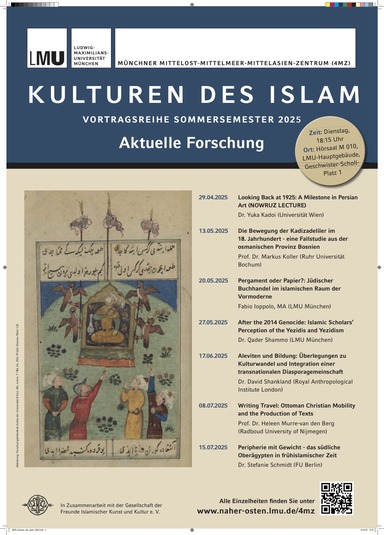
As part of the cultural program of the Summer Session 2025 – organized by the Institute of Middle and Near Eastern Studies at the University of Munich in cooperation with the Munich Middle East-Mediterranean-Central Asia Center (4MZ) / Münchner Mittelost-Mittelmeer-Mittelasien-Zentrum (4MZ) and the Society of Friends of Islamic Art and Culture / Gesellschaft der Freunde Islamischer Kunst und Kultur e.V.- the Yezidi Studies Center is proud to contribute to this important academic event. Dr. Qader Saleem Shammo will deliver a presentation on May 27, 2025, titled:“After the 2014 Genocide: Islamic Scholars’ Perception of the Yezidis and Yezidism.” For further details, please visit the official program page by clicking here
The Yezidi Studies Center participates in an international research project funded by the DAAD
The Yezidi Studies Center participates in an international research project funded by the DAAD. The project “Together for the Yezidis: Minority Protection and Genocide Prevention through Interdisciplinary Dialog” addresses the historical and ongoing persecution of the Yezidis, who have faced genocide and displacement in the Middle East, with many resettling in Armenia and Germany. It aims to strengthen minority protection and prevent genocide through interdisciplinary collaboration among academics, policymakers, and civil society in both countries. The project has four goals: Researching the Yezidis’ history of persecution and effective minority protection measures. Creating an international network of stakeholders focused on Yezidi issues Empowering Yezidi civil society through cooperation with organizations like cultural associations. Improving communication strategies to counter misinformation and raise public awareness about Yezidi challenges. By fostering academic partnerships, such as those between Leipzig University and Yerevan State University, and engaging in Yezidi communities, the project seeks to enhance integration, promote human rights, and prevent conflict. It also addresses the Yezidis’ precarious social and legal status, particularly in rural Armenia and post-2014 genocide contexts in Germany. The initiative promotes intercultural dialogue, cultural preservation, and sustainable mechanisms for minority protection, contributing to social justice and global stability. Two teams from Germany and Armenia build a common framework of objectives and conduct field research in the other country with the support of the Yezidi communities. Prof. Sebastian Maisel is the principal investigator and leads the Leipzig team, Sami Shammo participates as a field researchers as does Mariam Mandeki, another PhD student from Leipzig and Dr. Gor Yeranyan from the Matenadaran Center in Yerevan, Armenia. Dr. Qader Shamo is the liaison of the German Yezidi community. The Yerevan team is headed by Professor Vardan Voskanian from the Iranian Studies Department of Yerevan State University and includes Dr. Tereza Amryan and Dr. Artyom Tonoyan, also from Yerevan State University. Mr. Khidr Hajoyan, the President of the Yezidi National Union, is the liaison to the Armenian Yezidi community.
Participation in the International Conference on Yezidi Heritage and History in Duhok
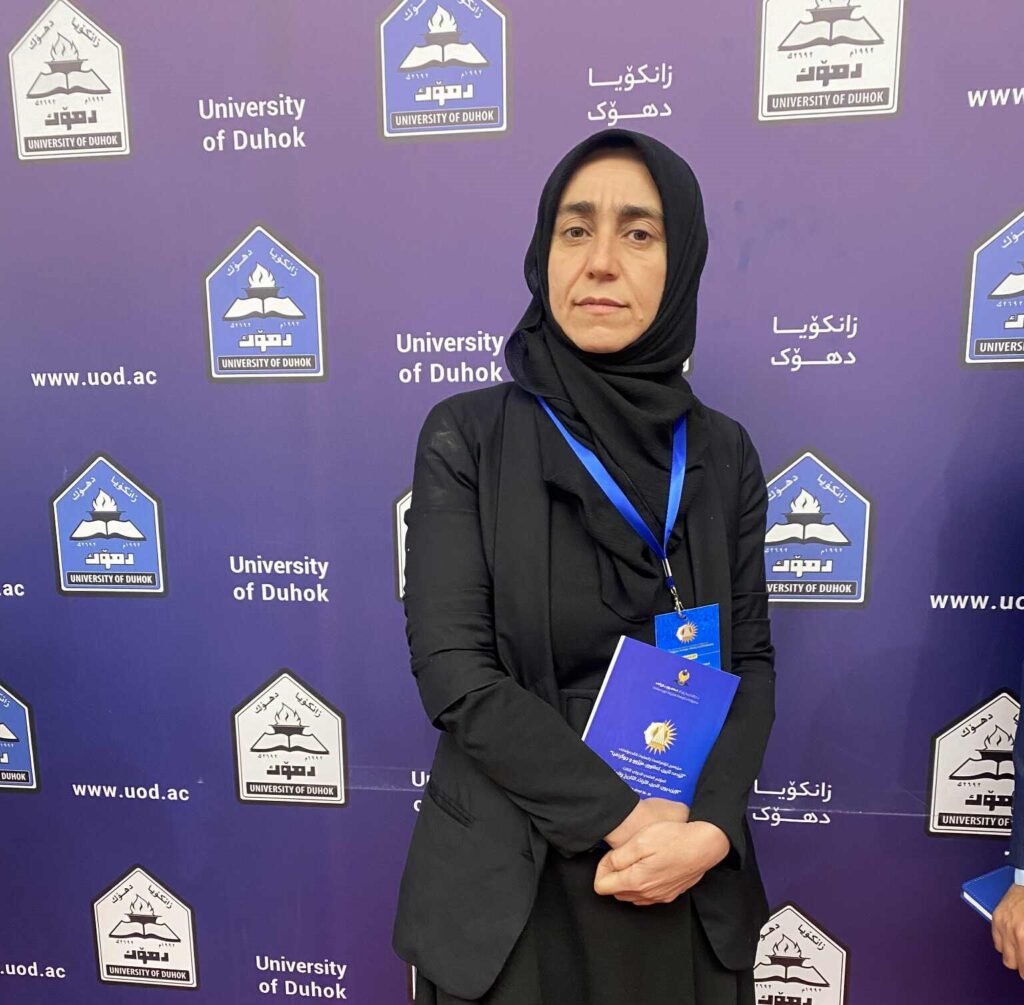
On April 29, 2025, Lalish Cultural Center in colabortation with the University of Duhok hosted the international conference under the title of “The Yezidis: Religion, Heritage, History, and Geography,” bringing together scholars and experts to discuss key aspects of Yezidi identity, history, and resilience. Assistant Professor Dr. Jehan Hussein Omar, a faculty member in the Department of Psychology at the College of Education – University of Zakho, and a postdoctoral candidate at the Yezidi Studies Center in Leipzig University, attended the conference as a researcher from the Yezidi Studies Center. During the event, she presented her research paper: “Self-Esteem Among Female Survivors of ISIS Captivity and Its Relationship to Selected Variables.” Her study aimed to shed light on the psychological resilience and challenges faced by female survivors of ISIS captivity, exploring how various factors influence their self-esteem and recovery process. The Yezidi Studies Center was honored that a postdoctoral candidate from the Center contributed to this academic Conference.e
“Frozen in the Past” The Book that Gives the Yezidis Survivors a Voice
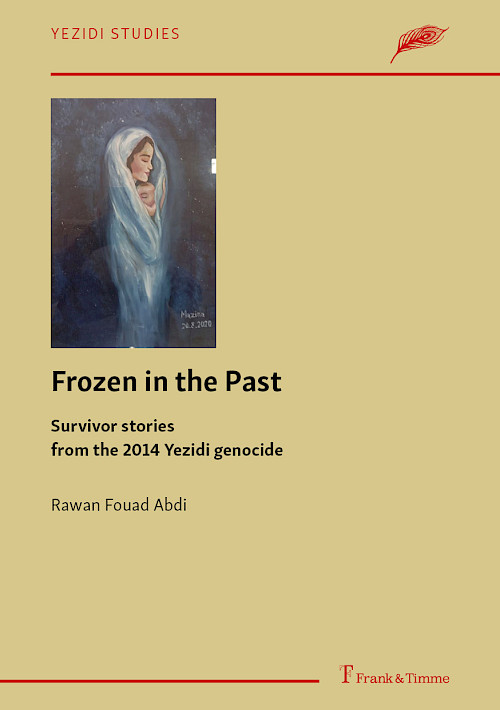
Frozen in the Past is more than a collection of survival stories – it is an appeal against forgetting and a call for justice. In August 2014, the so-called Islamic State (ISIS) committed genocide against the Yezidis in the Shingal region of Iraq. Thousands were murdered, abducted, enslaved and tortured. The survivors of the seriously traumatized community are still healing the deep wounds of these crimes, the 74th Ferman (genocide) in their history – and for justice. Frozen in the Past gives the survivors a voice. In haunting, unvarnished stories, they tell of imprisonment, rape, loss and the immeasurable suffering they had to endure. But despite the unimaginable cruelty, their storiesalso reveal courage, resilience and an unbroken will to regain hope. They remind us that documenting history is not just about recording facts but about honoring the humanity of those who lived through it. Rawan Fouad Abdi has spent years collecting these testimonies to come to terms with the crimes and to ensure that the world is listening. Author of the Book Rawan Fouad Abdi is a writer and researcher from Kurdistan Syria and currently a field researcher at the Center for Genocide Studies at Duhok University. She holds a BA in Public Policies from Duhok University and is interested in Yezidi affairs. In 2014, she immigrated to Kurdistan Iraq where she saw the effects of the Yezidi genocide firsthand.
Research Collaboration between Three German Universities, Duhok Polytechnic University, Iraqi Kurdistan Region and the Yezidi Studies Center
In the past, Kurdish, mostly Sunni, Muslim scholars and mullahs issued various fatwās (religious edicts) regarding the Yezidis, clarifying their positions on various issues related to Yezidi religion and society. Recently, social media have become a platform used by many Kurdish clerics, particularly in Iraqi Kurdistan, to issue fatwās and religious statements directed at both Muslims and non-Muslims. These scholars and mullahs often use their own social media channels through live broadcasts expressing their Islamic religious views. These platforms have become more influential than mosques in shaping Kurdish Muslim attitudes toward the Yezidis. During the 2014 genocide of the Yezidis by the Islamic State (ISIS), Kurdish Muslims showed some sympathy for the Yezidis and provided them with humanitarian assistance – a contrast to their historical, mostly hostile stance. However, the Kurdish Islamic religious stance did not change and in the period after the genocide, numerous anti-Yezidi fatwās issued by Kurdish Muslim scholars and mullahs emerged. These fatwās and perceptions, often in the form of videos continued and continue to appear extensively on social media and reflect the persistence of negative religious attitudes toward the Yezidis. Kurdish nationalist parties, however, asserted that the Yezidis are the original Kurds and that it was the duty of the Kurds to protect the Yezidis from any Islamic extremism. This, however, did not lead to a fundamental change in Kurdish religious discourse toward the Yezidis and did not protect them from Islamic religious hatred. Furthermore, Kurdish parties rather limited themselves to political propaganda to exploit them for political gains. The project raises several key questions: What is the nature and content of the fatwās and religious perceptions issued by Kurdish Muslim scholars and mullahs toward the Yezidis and has this changed as compared to historical fatwās and attitudes? What is the role of the Kurdish political parties in this issue? And how do these discourses affect the Yezidi community? This research will analyze and study historical sources including archival evidence. Regarding contemporary Kurdish Islamic religious discourse, it will rely on videos available on social media platforms, a large number of which the researcher has already collected, along with documents available online and preserved by government institutions, especially endowments, in the Kurdistan Region of Iraq. And we will conduct personal interviews with Kurdish Muslim scholars and mullahs. Applicant: Prof. Dr. Andreas Kaplony Project staff: Dr. Qader Shammo Funding: Private foundation Duration: 15 June – 31 December 2025 Cooperation with: Prof. Dr. Sebastian Maisel, Orientalisches Institut, Arabische Sprach- und Übersetzungswissenschaft (Universität Leipzig) Prof. Dr. Robert Langer, Study of Religions with special focus: Islam, Institute of Cultural Studies, Universität der Bundeswehr Munich Yezidi Studies Center, Universität Leipzig. Duhok Polytechnic University, Iraqi Kurdistan Region www.naher-osten.uni-muenchen.de
Call for PhD Applications in Yezidi Studies
The Yezidi Studies Center (YSC) in collaboration with the Oriental Institute at Leipzig University invites applications from potential PhD students who like to pursue a research project that relates to the goals and mission of the YSC. Under the supervision of Prof. Dr. Sebastian Maisel, the PhD student will conduct research and fulfill all other academic requirements to complete his/her thesis in the field of Yezidi Studies. Yezidi Studies is an interdisciplinary field with a focus on Yezidi society, culture and religion. Proposals that include topics to further this agenda are welcome. In order to allow for a larger representation in academia, female Yezidi applicants are especially encouraged to apply. Up to two successful applicants will be admitted to Leipzig University´s list of doctoral candidates. This entitles them to the benefits of other international PhD students in Germany. After approval, the selected candidates may start their work as soon as October 1, 2025. Residence in Germany is not required. The thesis may be written in German or English. No tuition fees are charged. However, no other financial support is granted with the acceptance into this program. The Yezidi Studies Center will assist the candidates in finding scholarships. Please send your proposal package that includes: – a cover letter about your motivation to apply for this program– the PhD proposal: max. 5 pages that includes a working title, precise research thesis, suggested methodology, and bibliographical notes– CV– a copy of your MA certificate to sebastian.maisel@uni-leipzig.de by April 30, 2025.