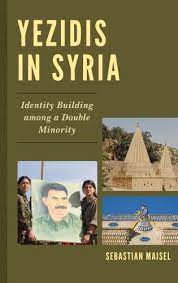
Yezidis in Syria: Identity Building among a Double Minority traces the development of Yezidi identity on the margins of Syria’s minority context. his little-known group is connected to the community’s main living area in northern
The histories of minorities in the young nation states of the Middle East is one of marginalization, oppression and bloody violence. In the case of the Yezidis, as well as the Armenians in the early twentieth century,
The subject of this book is the Yezidis, a small group people whose historic and current stronghold is the Kurdish region of northern Iraq,
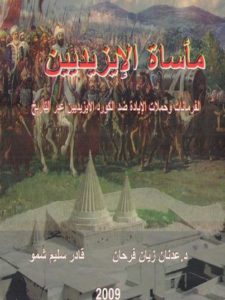
(Eds.) (2009): Maʾsāt al-Ēzidīyīn: al-Farmānāt wa Ḥamalāt al-Ibādah ḍidda l-Kūrd al-Ēzidīyīn ʿabra t-Tārīkh (Yezidi Tragedy: The Campaigns Against the Yezidis Throughout the History). Duhok: Khani Press.
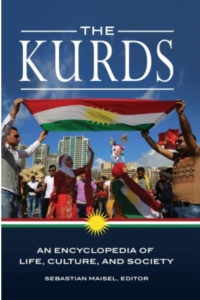
The Kurds: An Encyclopedia of Life, Culture, and Society provides an insightful examination the Kurds—from their historical beginning to today—through thematic and country-specific essays as well as important primary documents that allow for a greater understanding of the diversity and pluralism of the region.
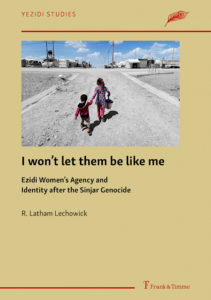
I Won’t Let Them Be Like Me: Ezidi Women’s Agency and Identity After the Sinjar Genocide: is a publication from the Yezidi Studies series, authored by R. Latham Lechowick, a Research Associate at the University of Cambridge, delves into the impact of the 2014 Sinjar Genocide on Ezidi women and the resultant societal transformations.
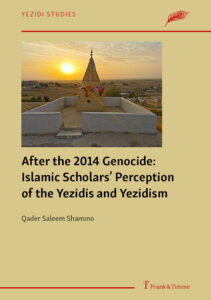
What are the origins of Islamic hostility towards the Yezidis and their religion? Can the historical cycle of Islamic violence against them be resolved? And have Islamic jurists and scholars reconsidered their views on Yezidis and Yezidism after the genocide of 2014? All these are valid questions—to which this work seeks some answers.
Frozen in the Past gives the Yezidis survivors a voice. In haunting, unvarnished stories, they tell of imprisonment, rape, loss and the immeasurable suffering they had to endure. Rawan Fouad Abdi has spent years collecting these testimonies to come to terms with the crimes and to ensure that the world is listening. Frozen in the Past is thus more than a collection of survival stories – it is an appeal against forgetting and a call for justice.
In the aftermath of the 2014 ISIS genocide against the Yezidis, an important question remains largely overlooked: how are Yezidis represented in Kurdish nationalist and Islamic religious discourse? This book explores how the genocide has been used for political, symbolic, and strategic purposes, often without meaningful efforts toward justice, compensation, or the reconstruction of Sinjar. It highlights the continued displacement of Yezidis, the shortcomings of reconstruction efforts, and the ways survivors have become part of political struggles. The study argues that the future of the Yezidis and peaceful coexistence in the Kurdistan Region are at risk unless Kurdish leaders fundamentally rethink their approach and move beyond failed policies.
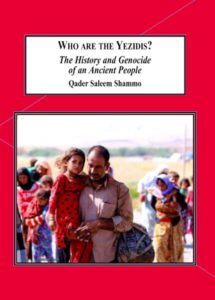
This book examines the history and present-day reality of the Yezidis, focusing on patterns of discrimination and persecution by Islamic communities and political authorities. Qader Saleem Shammo pays particular attention to the enslavement of Yezidi women and children and the slave markets established for their sale, drawing on detailed eyewitness accounts. The study addresses sensitive issues, including the fate of children born from rape and the application of Islamic law in countries where Yezidis live. By bringing together dispersed and often inaccessible sources, the book provides a clear account of Yezidi experiences and places the 2014 ISIS genocide within a broader historical context, showing how religious rulings (fatwās) were used to legitimize these crimes.